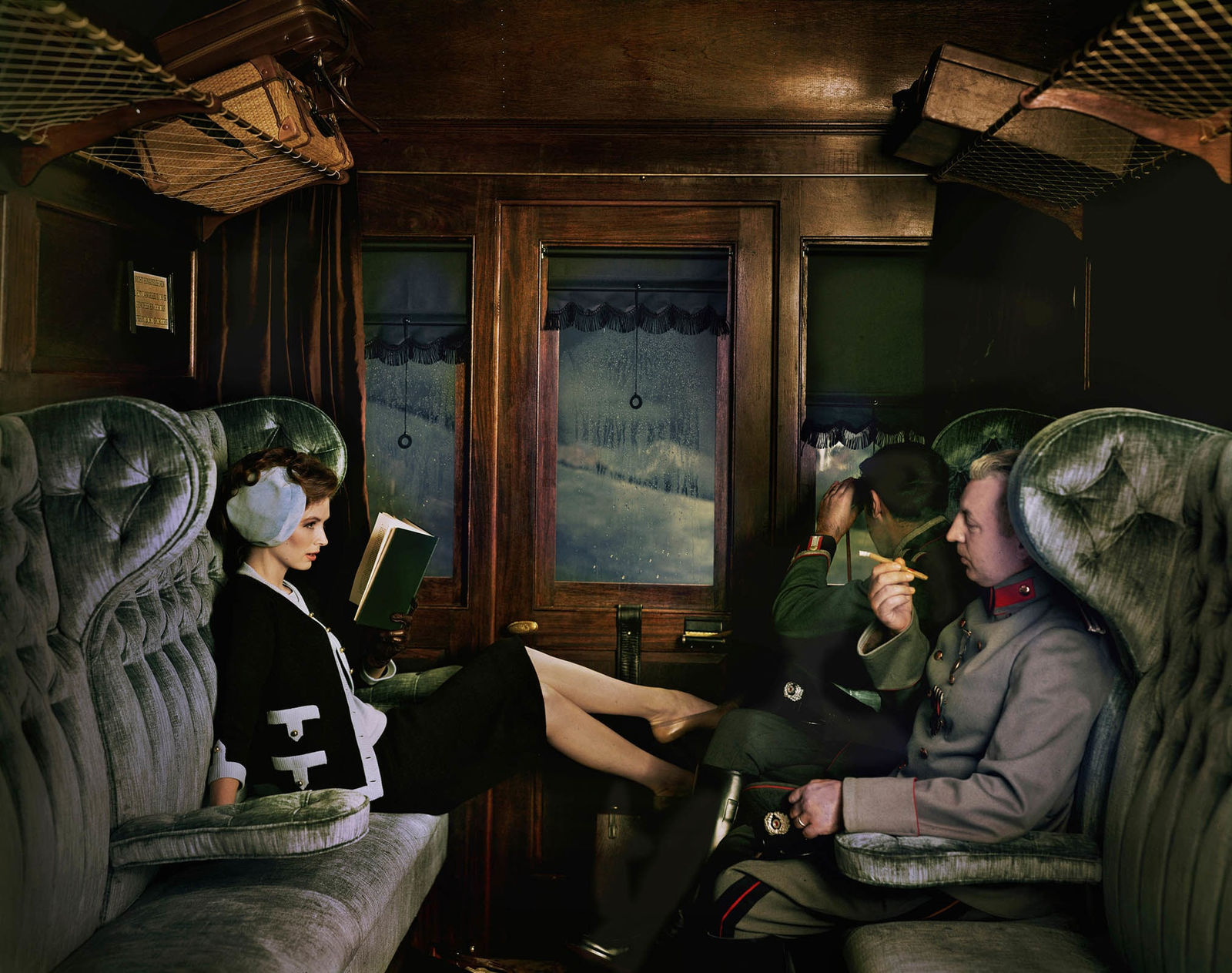
Essentially, the judge found that this qualifies as fair use because (a) publishing this with commentary is "transformative" even through "Defendants used the exact, unaltered [photo] in the blog post"; (b) "the blog post is not focused on the [photo]"; and (c) "there is no indication that [the use] impacted or has potential to impact the market or value of the Photo".
As an amateur photographer, this doesn't give me warm fuzzy feelings about posting anything I shoot online. By the reasoning here, a company (as in the commercial site here) can use my photos so long as the use is incidental and doesn't earn them too much money -- or at least impact my revenue, which is currently $0.
Heaven help me, though, should I misuse a corporation's copyrighted works, even purely personally.
That is how copyright has worked since forever. This isn't something new. Copyright is primarily about protecting your ecconomic rights (and attribution rights. In some countries also the integrity of the work). Its not meant as a way for you to fully control what happens to your creative output.
This particular case does seem very borderline though, if you are selling (or potentially selling) your photos, them using it as an illustration without permission is something that would be commercially negative to you and speak against fair use. I wonder to what extent the judge wasn't thrilled to be bothered by something with so few views and as a result was more sympathetic to thd blogger. I'm somewhat doubtful this would go the same way if it wasn't about something so inconsequential.
One of those economic rights, somewhat inconvenient to your argument, is charging for editorial usage.
The entire function of what remains of the stock photography economy relies on the basis that usage can be billed for. Not sure how else a photographer is ever going to earn money.
If we get to "it's not as if you were making money out of it before" as an argument, which this is approximate to, then the ability to earn as a photographer is destroyed.
> The blog post is transformative because “the Parker Train Photo is part of a broader work as published in the blog and accompanies fashion guidance, rather than being part of an anthology of the Photographer’s work.”
It reads like it's from parallel universe
"Conservatism consists of exactly one proposition, to wit: There must be in-groups whom the law protects but does not bind, alongside out-groups whom the law binds but does not protect." - Frank Wilhoit
Most countries deal with this under moral rights[0], but these aren't really protected in the USA.
no, copyright is about creating an economic right where one didn't exist before.
This imbalance is the issue. The photographer attempted to use a fraudulent system designed for the wealthy. Hopefully the loss disillusions those among us hoping for scraps. As an amateur photographer, post all you want, and expect nothing in return. If you shoot digital, keep your raw files to harvest lower-fidelty, online-ready formats. If you shoot film, you have both the scans and the negatives.
The reason why Fair Use exists is because we have a copyright law, a First Amendment, and common-law courts that are empowered to legislate from the bench[0]. That last bit is important: everything the courts rule can potentially become new law that binds the hands of future courts. This means the court needs to be careful when issuing their ruling.
They can't rule that the statute of limitations has passed, because the files were hosted continuously on a web server. If they did rule this way, then any online infringement can become unprosecutable so long as you keep the website up for 3 years before anyone notices.
They can't rule that it's de minimus. The whole photo was used.
They can't rule innocent infringement[1] because that requires specific facts that are not present in this case.
Normally in this sort of case, the courts would rule that a crime had been committed but not award any damages. Unfortunately, Congress decided that if you register your copyright, you are automatically entitled to an insane damage award. Otherwise, it would never be financially profitable to sue for copyright infringement in all but the most airtight cases, and copyright would be unenforceable.
The next available legal tool to dismiss the case is Fair Use, and that is so fact-intensive that you can get particularly arbitrary with what is and isn't binding precedent. In particular, the market usurpation factor (part C) can be adjusted to emphasize or de-emphasize the harm done to the original work. If a blogger uses a photo for a blog post with 43 views, there is no potential of market harm. If that same blogger gets a million views, then suddenly there IS a market harm and the courts will be more favorable to you.
My personal opinion is that the statutory damage award for registered copyright was a really fucking stupid idea. People who do not have a constructive[2] revenue stream should not be on the hook for damages they can't pay. If you want your photo off the blog post, that's one thing; but you shouldn't be able to demand life-ruining sums of money from legally careless bloggers.
Why? Because that's the basis of a very long-running extortion scheme that has been enabled by our copyright system. It started with the RIAA suing grandmas whose kids downloaded KaZaA, and only got worse from there, involving criminal enterprises started by lawyers who would upload fake porn to The Pirate Bay and then extort people who downloaded it. Really, there needs to be some kind of legal cutoff to immunize the ordinary man on the street from this bullshit while still allowing lawsuits against people actually involved in creative industry. But Congress hasn't bothered doing that. So the courts have to make it up as they go.
[0] You may have heard that certain other countries "don't have Fair Use". This is facially true because they aren't common-law countries, not because they don't have free speech. In civil-law countries the role of Fair Use is instead taken up by legislatively-granted exceptions to copyright.
[1] There is a specific defense to infringement called innocent infringement that the defense can use if they have evidence that they attempted to license the work in question.
[2] "Had or should have had", "known or should have known", etc. In law, a judge can coercively impute all sorts of things "constructively". You can have constructive knowledge, owe a constructive debt, etc.
The UK is a common law country and technically doesn't have fair use. We have "fair dealing" exceptions, but these are stricter in than American fair use. This is in part because the laws originated from EU legislation which is normally written to suit Napoleonic law countries...
UK copyright legislation largely started with the Statute of Anne in 1810 (or thereabouts). I'm not sure we can blame the EU! Much of what we have now derives from ratification of the Berne Convention in the early part of the 20th Century. Although TRIPS also impacts things. The most recent changes to the CDPA 1988 derive from WIPO treaty, IIRC, rather than from EU law itself.
It has certainly felt like there has been undue influence of UK copyright from USA-based interests over the last few decades.
https://en.wikipedia.org/wiki/Copyright_and_Related_Rights_R...
That being said, a lot of constitutional provisions don't apply the moment you step foot in a civil court. For example, you actually can be compelled to self-incriminate, 4th Amendment be damned[0], so long as it's not a criminal proceeding. Likewise, there's caselaw stating that the 8th Amendment flat-out does not apply until the US is named as a party on the lawsuit.
On the other hand, SCOTUS has also thrown out punitive damage awards on 14th Amendment due-process clause grounds. In this case[2], we even have a math formula: punitive damages cannot exceed 10x the compensatory damages. Of course, because copyright already has very high statutory damages, we rarely even need to impute punitive damages to get billion dollar awards.
This is all dancing around another question, though: why do the damages have to fit the crime and not the person? Europe assigns scaling damages based on the defendant's ability to pay, and that would neatly solve the problem of well-pocketed copyright scofflaws that Congress attempted to fix with a sledgehammer. The problem is, American law doesn't actually do this. As far as I'm aware, it's not outright unconstitutional to scale fines to income, but given that it's unusual, I could imagine SCOTUS also finding it to be cruel. I mean, you are singling out the rich for being rich, and America was built to protect the interests of the rich.
[0] When I asked Gemma 4 what it thought of an earlier version of this post, it pedantically pointed out that the only legal compulsion civil courts can apply is an adverse inference - i.e. juries and judges in civil court are allowed to assume you're hiding evidence of guilt, whereas in criminal court they're not. I don't think this distinction matters.
[1] RIAA + MPAA = ???
Yeah, fascinating that a 43-view blog post would go all the way to the federal court like this. Surely the plaintiff often has people give up and pay because they fear the case? Otherwise the economics of chasing down copyright violations of this scale surely don't make sense.
I swear, on a busy week I had about 5 people reading that blog and they were all coworkers. The next day, I had a 6th visitor from Los Angeles and got excited. Who was this mysterious visitor? I found out when I opened my email and saw a C&D from Universal's lawyers saying I was abusing the trademark.
I blogged the next day, "Wtf, Universal?" and a few days later, got an email from the local celeb apologizing for the overzealous legal team. He was indeed totally cool about it.
> “A lawsuit like this heightens the demand for Generative AI replacements.”
Most generative AI corpora were arguably trained on copyrighted material, making the output potentially infringing.
Training is not neccesarily sufficient for it to be a derrivative work, just like if you learned to draw based on famous drawings doesn't mean every single drawing you ever made is infringing.
Obviously there are cases where it could be infringing, its going to depend how close the output is to the original.
I guess it depends on how you read the post, is it saying use gen-AI to intentionally recreate the photo, something that sounds danger-zone, or are they saying use gen-ai to make some other photo suitable for purpose?
AFAIK american law is going towards similar setup.
So the process of acquiring inputs may or may not be an infringement, but with at least proposed EU rules it does not matter to created model itself.
The exception being that output it produces is judged similar to infringement as human output without any "transformative work" credit to model - so similar to how a human could learn a book or painting to memory and close enough reproduction from memory would be infringement, but not generally using the ideas taken from them
That's why, say, 17 USC 106 lists reproduction as the first exclusive right of a copyright holder. And why Berne Article 9 [^1] is about restricting right of reproduction to the author.
Damages are often, in different jurisdictions, related to actual harm. So, distribution is the focus of lawsuits because actual harm in the making of a copy is usually negligible. Few people are suing to stop copying, they're suing to be recompensed for the [potential] commercial benefit derived from the copying.
In as far as you need to make a copy to use it to process and adjust the weights of an ML model, then yes this activity is an infringement to the right to control reproduction.
One of the measures for transformative use is whether the production of the copy commercially harms the original creator/author. I can't see how you can argue that ML models don't do that. Besides which we don't have an equivalent precedent to 'transformative use' in UK so where our courts can go with all this is not clear.
We don't know that model training is the same thing as inspiration. Training is a mathematical process with theoretically deterministic outputs. It's converging the weights towards being able to exactly reproduce the training data, rather than parts of the training data subjectively influencing a creative output. We will just have to see how this plays in court.
On one hand aggressively punitive copyright claims stifle creativity and innovation in transformative art. On the other hand, generative AI reopens that transformative creativity.
If this were still the norm, it would feel crazy that blockbuster movie studios are still recycling comic book characters from the 1950s.
Consider the case where someone deliberately prompts the AI to build a facsimile image and the AI does a creditable job after some tweaking.
Tremblay v. OpenAI, Inc., No. 3:23-cv-03223 (N.D. Cal.) (https://dockets.justia.com/docket/california/candce/3:2023cv...)
Andersen v. Stability AI Ltd., No. 3:23-cv-00201 (N.D. Cal.) (https://law.justia.com/cases/federal/district-courts/califor...)
Authors Guild v. OpenAI, Inc., No. 1:23-cv-08292 (S.D.N.Y.) (https://law.justia.com/cases/federal/district-courts/new-yor...)
Getty Images (US), Inc. v. Stability AI, Inc., No. 1:23-cv-00135 (D. Del.) (https://dockets.justia.com/docket/delaware/dedce/1:2023cv001...)
The New York Times Co. v. Microsoft Corp., No. 1:23-cv-11195 (S.D.N.Y.) (https://law.justia.com/cases/federal/district-courts/new-yor...)
Richard Kadrey et al. v. Meta (https://www.documentcloud.org/documents/25984135-richard-kad...)
Bartz v. Anthropic (https://www.documentcloud.org/documents/25982181-authors-v-a...)
---
Further reading:
"Generative AI Systems Tee Up Fair Use Fight" (Feb 2024) https://natlawreview.com/article/generative-ai-systems-tee-f...
"Meta’s AI copyright win comes with a warning about fair use
The federal judge who ruled in Meta’s favor still isn’t convinced its use of copyrighted materials for AI training qualifies as fair use." (Jan 2025) https://www.theverge.com/news/693437/meta-ai-copyright-win-f...
"Anthropic wins a major fair use victory for AI — but it’s still in trouble for stealing books
Judge William Alsup determined that Anthropic training its AI models on purchased copies of books is fair use." (Jun 2025) https://www.theverge.com/news/692015/anthropic-wins-a-major-...
"Copyright Office Weighs in on AI and Fair Use Amid Major Leadership Shakeup" (May 2025) https://ipwatchdog.com/2025/05/12/copyright-office-weighs-ai...
But aren't all of these initial decisions? That is, I don't expect that this is decided until there's a Supreme Court decision. There's still two levels of appeal to go before we get there.
As always, IANAL, but I do listen to their podcasts often (IANALBIDLTTPO)
> Remarkably, the opinion doesn’t mention the statute of limitations at all, even though the original post had been published no less than 14 years earlier (I’m crediting the 2011 blog transfer as a possible republication). This silence reflects that the statute of limitations doesn’t functionally exist in online copyright law any more. Each new view/download nominally constitutes a new infringement, in which case the SOL resets to the most recent visit to the post.
They sort of look like WWII Nazi uniforms, but they aren't.
Maybe they are made-up?
Any old Russian woman (I mostly know Russians, not many from other Soviet states) will tell of the shortage of men. I never heard of the women on the front lines, I'll ask about that. I'm afraid we don't have much time to learn these things any more.
I do know that he had women combat pilots. I think there was a movie, made about that.
I note that the guy in the foreground is wearing a gray suit, but the hat is green.
Definitely prop stuff.
One of the things that I find amusing about Internet "found historical photos," is that women are usually made up with modern styles. I would not be surprised if they were originally done as fashion shoots, like this one.
Personal/non-commercial use should be fair game for everything for everyone.
The plaintiff gets scolded for not trying to settle. But, by the article’s own account, the defendant ignored emails from the plaintiff!
Photographers should not stop suing if that’s what it takes. People should stop stealing.
That’s a bit rich, isn’t it? Why did she not simply search the file name, nevermind reverse image searching the photo itself? Since when is ignorance an excuse - especially in a case like this, when claiming ignorance/negligence could easily cover for deliberate intent?
Since 1998. This is a claim under 17 USC 1202, created by the DMCA, which explicitly says requires intent.